 By Marian Friedrichs
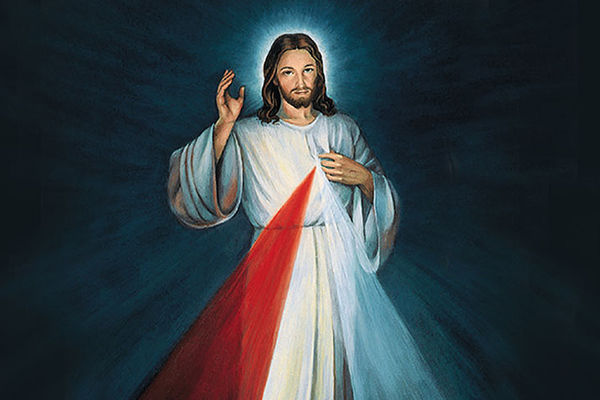
When we look at the Divine Mercy Image, the Lord meets our gaze as He steps forward, a living white center of light out of the gray darkness. We see the signature, with its simple words of trust in the Merciful Jesus. The rays of mercy reach toward us, streaming pale and red from His breast. All of these details, clear and vivid, are there for us to search and contemplate.
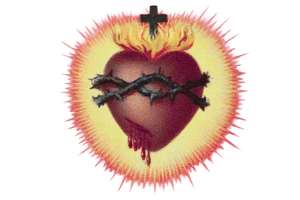
Yet what we do not see, what the white robe covers but toward which His fingers invitingly gesture, is the source of the light that streams from Him: His Sacred Heart, all aflame.
From the treasury of her art and devotions, the Church offers the searching light and inviting words; the piercing crown, spilling blood, and the burning fire of His merciful love, which is the reason for it all.
Recently during our morning prayer time, I read the 25th chapter of Proverbs to my children, and these words jumped out at me: “If your enemies are hungry, give them food to eat; if thirsty, give them something to drink; for live coals you will heap on their heads” (Prov 25:21-22).
I was struck by the idea of mercy — exemplified by the Corporal Works of giving food to the hungry and drink to the thirsty — as uncomfortable, even painful, to receive sometimes. It made me think of all the times I have writhed against the mercy offered to me by my husband or one of the children when I was still tense after a conflict.
Accepting love while still clutching resentment, indignation, or defensiveness feels like holding frozen fingers next to a fire: It actually hurts! I have to force myself not to back away from the hug or reject the “I’m sorry.” My clenched heart suffers through the thawing and softening.
Such icy resistance to mercy (even while desperately wanting to accept it) too often exists between God and souls. I believe, then, that one of the most important things we can do, especially during the holy season of Lent, is to pray the Divine Mercy Novena of Chaplets, not only from Good Friday to Divine Mercy Sunday, but all year. Another is to exchange mercy humbly with the ones closest to us.
When a heart is frozen shut, drawing too near the fire of His love hurts. In the Novena, each day we bring a different group of souls into “the abode of [Jesus’] Most Compassionate Heart,” where that fire blazes. Many souls — ourselves included — belong to more than one group, so that again and again we usher them close to the divine hearth fire. Over time, if the soul allows it, the defensive shell melts, the clenched hand opens, the stiffened fingers soften and come to rest in His offered palm.
Bear wrongs patiently. Forgive all injuries. Let Jesus hear us perform these Spiritual Works of Mercy from the Cross, where He suffered an agony so uniquely terrible that it led to the development of a new word: Excruciating.
We know our daily frustrations are nothing compared with crucifixion. But it can feel excruciating to endure calmly the torment of our own ire: to resist snapping or brooding when, as parents, we hear our children bickering over nothing again. When, as patients, we are made uncomfortable by a clumsy caregiver again. When, as elderly or homebound, we feel forgotten or neglected again. It can feel excruciating to return the hug or the handshake, to say “It’s all right” or “I’m sorry, too” while the wintry storm of anger or hurt is still whipping through us.
But with the Easter season comes the thaw of spring. It can remind us of the warmth carried by the rays of Mercy from the fire within the Sacred Heart — the flames of love which, when received through persistent prayer and everyday exchanges of mercy, can penetrate and revive any frozen heart, beginning with our own.
So ignite your heart with Jesus’ fiery mercy, and help heal the world with Works of Mercy!